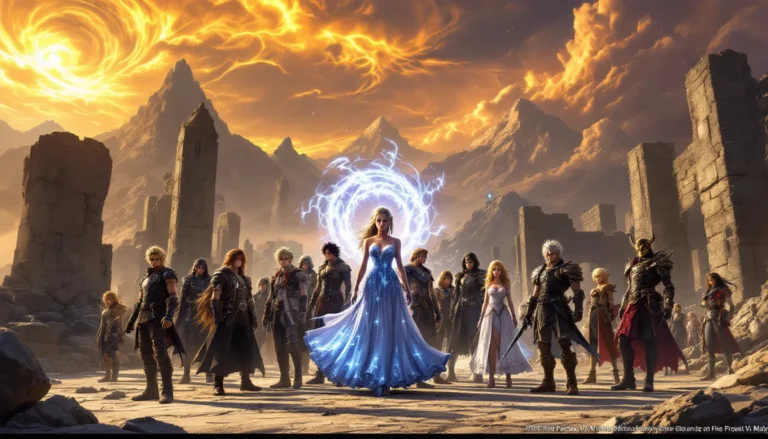
The Final Fantasy XIV TTRPG brings the sprawling world of Eorzea to your tabletop, letting you craft your own stories within Square Enix’s beloved MMO universe. Whether you’re a hardened FFXIV player looking to explore new narrative possibilities or a tabletop RPG veteran interested in a Final Fantasy-themed system, this tabletop adaptation offers something special: a mechanically sound ruleset wrapped in one of gaming’s richest fantasy settings. If you’ve ever wanted to run your own campaign as a Lalafell dragoon or play through a custom heist in Ul’dah, the Final Fantasy tabletop RPG makes it possible. This guide covers everything from character creation to campaign building, helping you understand what makes the Final Fantasy XIV TTRPG tick and how to get your group started.
Table of Contents
ToggleKey Takeaways
- The Final Fantasy XIV TTRPG uses a streamlined d6-based system that’s accessible to both new tabletop players and experienced GMs, focusing on collaborative storytelling over MMO mechanics.
- Character creation mirrors the MMO’s job structure with races and jobs like Paladin and Dragoon, but offers meaningful mechanical choices through point-based stat distribution and customizable ability progression.
- Campaigns set in Eorzea can tap into existing FFXIV lore and timelines, giving GMs ready-made worldbuilding scaffolding without requiring players to know the MMO.
- The system emphasizes narrative-driven progression, awarding experience for story milestones rather than combat, allowing campaigns to conclude intentionally at any level.
- Getting started requires only the core rulebook or starter set ($30-60), a few friends, and willingness to try—community resources and homebrew support make the Final Fantasy TTRPG continuously expandable.
- Compared to D&D 5e, the FFXIV TTRPG resolves faster with simpler action economy, while offering a setting unique to Eorzea rather than generic fantasy worlds.
What Is The Final Fantasy XIV TTRPG?
The Final Fantasy XIV TTRPG is Square Enix’s official tabletop RPG system set in the world of FFXIV. It translates the MMO’s job system, lore, and aesthetic into a pen-and-paper format designed for small groups of 3-5 players plus a Game Master. Unlike the online game, this Final Fantasy tabletop RPG focuses on collaborative storytelling and character-driven narratives rather than raid mechanics and endgame grinds.
The system uses a d6-based resolution mechanic, meaning most rolls involve six-sided dice. This keeps gameplay fast-paced and accessible compared to crunchier systems. The ruleset accommodates both new tabletop players and experienced GMs, with optional complexity that scales to your group’s preference.
What sets the Final Fantasy TTRPG apart is its direct integration with FFXIV lore and canon. Your party isn’t just adventurers in a generic medieval world, they’re Adventurers in Eorzea, potentially crossing paths with the Scions of the Seventh Dawn or exploring the consequences of events from the MMO. This makes it particularly appealing to FFXIV players who want deeper narrative exploration of the world they already know. The Final Fantasy 14 TTRPG also works as a standalone experience, so you don’t need MMO knowledge to enjoy it.
Core Game Mechanics and How to Play
Character Creation and Job System
Character creation in the Final Fantasy XIV TTRPG mirrors the MMO’s job structure, giving players familiar archetypes to work from. You’ll select a race, Hyur, Miqo’te, Lalafell, Roegadyn, Au Ra, Viera, or Hrothgar, and then choose your job from classics like Paladin, Dragoon, Ninja, Summoner, White Mage, and Black Mage. Each job has a distinct mechanical flavor that influences how you contribute to encounters.
Stats in the system break down into six core attributes: Might, Finesse, Intellect, Spirit, Vigor, and Resolve. Rather than rolling for ability scores like in D&D, you distribute a fixed point pool across these attributes during character creation, giving players agency in how they want their character to feel. A Dragoon might invest heavily in Might and Vigor, while a Black Mage prioritizes Intellect and Spirit.
Each job gains unique abilities called Traits and Combat Actions as characters level. Unlike the MMO’s rigid progression, the TTRPG offers meaningful choices in how you specialize. At key levels, you’ll select from multiple advancement options, letting two Paladins feel mechanically distinct based on their player’s choices.
Combat System and Encounter Rules
Combat uses a turn-based initiative system. When a battle starts, all combatants roll d6 plus their Finesse modifier to determine turn order. Each turn, you can take one major action (like using a combat ability), one minor action (like moving closer or using a potion), and free interactions (talking, interacting with objects). This structure keeps combat flowing without excessive bookkeeping.
Attacks resolve by rolling a d6 pool based on your relevant stat plus any modifiers from your equipment or abilities. Enemies have a difficulty number (DN) that your roll must meet or exceed. Hit, and your ability’s effect triggers. Miss, and nothing happens, there’s no “half damage on a miss” here, which keeps the system snappy.
Encounters scale based on the number and quality of enemies. A single strong enemy (like a dragon) plays differently than a swarm of weaker foes (like goblin servants). The rulebook provides clear guidelines for GMs to estimate enemy difficulty, preventing the TPK (total party kill) by accident or making fights trivially easy.
Skills, Experience, and Leveling
Outside combat, your character relies on Skills to accomplish tasks. These represent training in specific competencies like Swordsmanship, Thaumaturgy, Medicine, or Persuasion. When you attempt something uncertain, you roll d6 plus your skill rating plus relevant stat modifiers. This replaces the MMO’s button-mashing with narrative tension.
Experience in the TTRPG comes from completing story milestones rather than killing enemies. Finishing a quest, uncovering a major plot point, or surviving a dangerous encounter awards XP. This encourages GMs to focus on narrative pacing instead of artificial encounter balance.
Leveling happens at regular intervals (typically after 3-5 sessions). You gain ability points to spend on new Combat Actions, Traits, or Skill improvements. Unlike the MMO where everyone reaches max level, TTRPG campaigns can end at level 10, 15, or wherever your story concludes. This lets your character development arc feel intentional rather than endless.
Setting and Lore: Bringing Eorzea to Your Table
The World of Eorzea and Available Regions
Eorzea is massive, and the TTRPG rulebook provides detailed information about major regions suitable for campaigns. The bustling city-state of Ul’dah dominates Thanalan, making it ideal for urban intrigue, merchant conspiracies, and political drama. The Lominsan Archipelago offers naval adventures and pirate encounters. The Shroud around Gridania feels mystical and druidic, perfect for campaigns dealing with nature magic and the Elementals.
Dom Encum features arid deserts and isolated settlements, lending itself to exploration and discovery. Coerthas, frozen and desolate, creates a harsh survival atmosphere. The Far East beyond the Ruby Sea expands potential setting scope, introducing exotic cultures and different architectural aesthetics.
Within these regions, the rulebook provides settlement details, notable NPCs, environmental hazards, and plot hooks. A GM doesn’t need to improvise endlessly, they can open the rulebook and find information about an inn in Limsa Lominsa, a merchant caravan route between Thanalan settlements, or what political tensions simmer in Uldah’s Sultanate.
Connecting TTRPG Campaigns to FFXIV Lore
The beauty of setting your campaign in Eorzea is tapping into existing lore. Your party might investigate the Ascian conspiracy, even if they’re far from the main MSQ characters. They could interact with established organizations like the Scions, the Flame General’s command, or the Syndicate. The rulebook includes timelines showing major canonical events, letting GMs anchor their campaign within FFXIV’s narrative.
Your group has flexibility here. Do you want your campaign to occur during the current expansion? During the Calamity? An alternate timeline where major events took different turns? The rulebook supports all these choices. What matters is that the cultural context, magical system, and political landscape of Eorzea provide immediate worldbuilding scaffolding. Players understand Eorzea already or can quickly grasp it, accelerating the campaign’s start.
Essential Books, Materials, and Starter Sets
Core Rulebooks and Supplements
The foundation of the Final Fantasy XIV TTRPG is the Core Rulebook, which contains everything needed to play: character creation rules, mechanics, job descriptions, combat systems, sample encounters, and basic lore information. It’s about 300 pages of dense content, but the core rules section is digestible even for new GMs.
Beyond the core book, Square Enix has released supplements like job-specific sourcebooks (expanding options for specific classes), regional guides (diving deeper into specific areas of Eorzea), and adventure modules (pre-written campaigns). These aren’t mandatory, the core rulebook is genuinely self-contained, but they expand possibilities significantly.
The Starter Set is the entry point for groups new to the TTRPG. It includes the core rules summary, pre-made character sheets, dice, a GM screen, and an introductory adventure module. This is what you’d buy if your group has zero tabletop RPG experience or wants to test the system before committing to the full rulebook.
Where to Purchase and What to Expect
You can purchase the Final Fantasy XIV TTRPG materials through Square Enix’s official store, major retailers like Amazon, or local game shops. Prices typically run $50-60 for the core rulebook and $30-40 for the starter set. PDFs are also available for digital play or reference.
Component quality is solid. Books feature full-color artwork pulled from FFXIV, making them visually consistent with the MMO. Dice sets are standard quality, and character sheets are well-organized. The production value matches what you’d expect from a major publisher.
For digital play via platforms like Roll20 or Foundry VTT, the TTRPG isn’t as extensively supported as D&D 5e yet. But, community members have created character sheet templates and homebrew modules. If you’re playing entirely online, you might spend time customizing setup, but it’s definitely playable.
Getting Started: Tips for Game Masters and New Players
Building Your First Campaign
When starting a campaign, define its scope clearly. Are you running a short 5-session arc investigating a murder in Ul’dah, or a 20+ session campaign exploring the Dragonsong War from an unconventional angle? The length determines pacing and character investment expectations.
Next, establish the party’s initial connection to Eorzea. Are they refugees, adventurers seeking fortune, agents of a city-state, or something else? This answers “Why are you together?” and “Why are you adventuring?” Real campaigns stumble when players lack clear motivation.
Start with a strong scene. The rulebook recommends diving into action or intrigue rather than lengthy exposition. Maybe the party arrives in a town just as violence breaks out, or they’re already mid-heist. Once momentum builds, characters organically learn about the world through play.
Use the rulebook’s provided plot hooks and encounter templates. Don’t treat them as gospel, customize them. A minor NPC can become a recurring antagonist. A one-off dungeon can become a faction headquarters. The book provides scaffolding, not railroad tracks.
Creating Memorable NPCs and Encounters
Memorability stems from specificity. Rather than “a merchant,” describe “a Lalafell merchant obsessed with rare spices, who stutters when nervous and has a grudge against the Lominsa merchant guild.” One memorable detail makes an NPC stick in players’ minds for sessions afterward.
Encounters need stakes beyond “defeat these enemies.” Combat encounters are more engaging when they involve objectives, defend a position, escort an NPC to safety, prevent an enemy from reaching an objective, rather than just kill all the bad guys. Roleplay encounters (conversations, negotiations, investigations) benefit from multiple success paths. If players can accomplish a goal through combat, persuasion, or stealth, the encounter feels flexible.
Balance information sharing carefully. Twinfinite covers guide structure principles that apply here: don’t dump world information on players. Reveal facts as they become relevant. An NPC mentions tension between two noble houses when it matters to the current scene, not in a pre-game briefing.
Use atmosphere and description. The TTRPG’s d6 system runs faster than rules-heavy alternatives, so invest saved time in painting scenes. Describe the creaking floorboards of a decrepit mansion, the acrid smell of airship fuel, the oppressive silence of the Dragonsong War’s aftermath. Sensory details make encounters feel real.
Community, Resources, and Support
Active Community Groups and Online Hubs
The Final Fantasy XIV TTRPG community is smaller than D&D’s but growing steadily. Reddit communities like r/FFXIVTTRPG serve as gathering places for sharing campaigns, asking rules questions, and posting homebrew content. Discord servers dedicated to the system connect players in specific regions and time zones.
FFXIV’s own community boards have TTRPG discussion threads where players share campaigns set in their FC’s (Free Company’s) lore or coordinate cross-guild games. These spaces are valuable for finding groups, especially if you’re looking to play with people familiar with FFXIV.
Japanese gaming sites like Siliconera covers Japanese JRPG news and occasionally feature TTRPG announcements, especially about new supplements or official rulings. Gematsu focuses on Japanese gaming announcements, making it worth monitoring for FFXIV TTRPG release information and expansion content.
Character Sheets, Tools, and Digital Resources
Official character sheets are available as free PDFs on Square Enix’s website. Community members have created Google Sheets and Excel templates with automatic calculation of modifiers and damage rolls, saving time during play.
For digital campaigns, Roll20 has community-created FFXIV TTRPG character sheets, though they require manual setup. Foundry VTT users have also published modules adding system-specific features. These tools aren’t required, a printed character sheet and pen work perfectly fine, but they streamline digital play.
Homebrewing is encouraged. The community shares custom job variants, additional spells, and new regions. The rulebook explicitly supports modification, so your group’s version of the TTRPG might differ meaningfully from another’s. Transparency about house rules matters more than strict RAW (Rules As Written) adherence.
FFXIV TTRPG vs. Other Fantasy Tabletop Systems
The Final Fantasy XIV TTRPG occupies a unique niche. Compared to D&D 5e (the tabletop RPG standard), the FFXIV system is lighter mechanically and faster to resolve. D&D’s action economy feels complex, bonus actions, reactions, opportunity attacks, while the FFXIV TTRPG’s single major action per turn is simpler to teach and run.
D&D 5e offers more published material and a larger community, making it easier to find modules and house rules. The FFXIV TTRPG’s smaller ecosystem means less third-party content but also less noise to filter through. If you prefer focused, official content, FFXIV wins.
Pathfinder 2e shares the FFXIV TTRPG’s preference for clarity and balanced mechanics. But, Pathfinder 2e is considerably more rules-dense. If your group finds D&D 5e too simple and wants granular mechanical control, Pathfinder 2e suits you better than FFXIV TTRPG.
ForKardinal systems like Vampire: The Masquerade or Powered by the Apocalypse games, the FFXIV TTRPG is more tactical. It emphasizes combat and skill checks over GM improvisation and player creativity within vague frameworks. This makes it more familiar to MMO players, since the mechanics feel similar to hotbar-based gameplay.
The real differentiator is setting. No other TTRPG is Eorzea. If immersion in FFXIV’s world matters to your group, no alternative compares. If your group primarily cares about light, fast-paced fantasy mechanics, D&D 5e might offer more flexibility in settings and available content.
Conclusion
The Final Fantasy XIV TTRPG successfully translates an MMO into a tabletop format without losing the soul of Eorzea. Whether you’re a Final Fantasy 14 TTRPG newcomer curious about the Final Fantasy tabletop RPG or an FFXIV veteran exploring a new way to engage with the world, the system delivers genuine value. Its streamlined mechanics let stories breathe without excessive rules overhead, while its grounding in FFXIV lore provides immediate worldbuilding depth.
Getting started requires only the core rulebook or starter set, a few friends, and willingness to try something new. The community is welcoming and the system is genuinely fun. Pick up the books, roll some dice, and discover why Eorzea works just as well on a tabletop as it does in an MMO.