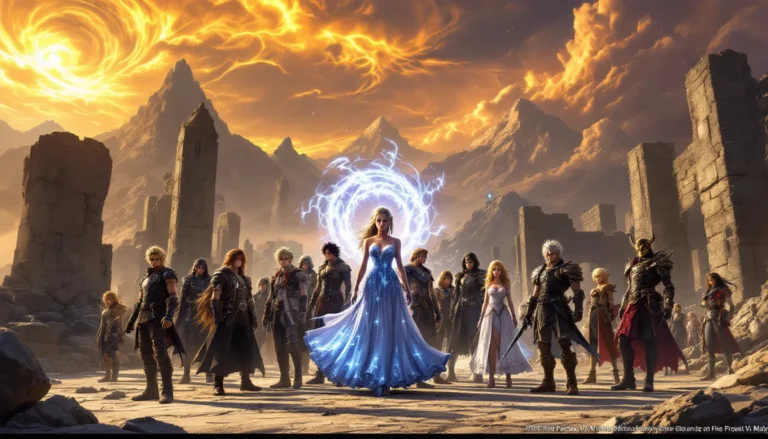
Final Fantasy pixel art represents far more than nostalgia, it’s a defining visual language that shaped how millions of gamers perceive RPGs. From the humble 8-bit sprites of the original 1987 NES title to the carefully remastered sprites in modern releases, pixel art became the artistic foundation upon which one of gaming‘s greatest franchises was built. What made these blocky, limited-color characters feel alive was the sheer ingenuity of the developers working within strict hardware constraints. The aesthetic didn’t just survive the industry’s shift toward 3D: it evolved, persisted, and continues to influence game design today. Understanding the history of Final Fantasy pixel art is understanding how technical limitations can spark creativity that outlasts the technology that inspired it.
Table of Contents
ToggleKey Takeaways
- Final Fantasy pixel art transcended hardware limitations to become a defining visual language that shaped how gamers perceive RPGs and continues influencing game design today.
- Strict 8-bit and 16-bit constraints forced developers to innovate through intentional design choices, resulting in iconic characters and worlds that aged better than many 3D successors.
- The shift to 3D graphics in the late 1990s initially abandoned Final Fantasy pixel art’s visual clarity and expressive animation, driving a disconnect with longtime fans.
- Fan communities preserved and celebrated Final Fantasy pixel art through ROM hacks, sprite recreations, and documentation, maintaining its cultural significance during the industry’s 3D era.
- Square Enix’s Pixel Remaster series (2021-2022) validated that Final Fantasy pixel art has enduring artistic appeal beyond nostalgia, attracting new generations of players across modern platforms.
- Pixel art remains resonant in 2026 because it offers clarity, timelessness, and intentional design that stands apart from homogenized photorealistic graphics and democratizes creative expression.
The Birth Of An Iconic Visual Style
In 1987, when the original Final Fantasy hit the Famicom in Japan, pixel art wasn’t a deliberate stylistic choice, it was the only option. The NES hardware could display sprites with a maximum resolution of 8×16 pixels per character, forcing designers to communicate personality, class identity, and emotion through incredibly limited visual information.
Square’s (now Square Enix) art team understood something fundamental: constraints breed innovation. The sprite artist had to convey whether a character was a knight, a magic user, or a thief through silhouette alone. Color palettes were brutally restricted, maybe 16 colors per sprite at best. A thief’s long hair had to be visually distinct from a knight’s helmet using only a handful of pixels. This forced clarity actually made characters more iconic, not less. When you see a Final Fantasy warrior’s distinctive red and white armor in 8-bit form, you know exactly what they are without a label.
The early pixel art also established visual conventions that would ripple through the entire series. Blond hair immediately suggested a protagonist or hero. Large weapons communicated power. Bright colors in the background meant safety: darker tones hinted at danger. These weren’t accidental, they were deliberate communicative shortcuts that worked because players inherently understood them.
What’s remarkable is how this aesthetic felt timeless even when it debuted. Players weren’t thinking about pixel art as a limitation: they were thinking about the adventure, the story, the magic system. The pixels were invisible in the best possible way, they served the game, not the other way around.
Classic Entries That Defined The Aesthetic
Final Fantasy I Through VI: The 16-Bit Revolution
The transition from the NES to the Super Famicom in 1990 was a seismic shift for Final Fantasy pixel art. Suddenly, developers had more colors, higher resolution, and more processing power. Yet the games didn’t immediately abandon the pixel art approach, instead, they refined it to extraordinary effect.
Final Fantasy IV (1991) represented a quantum leap. Characters now had more expressive faces, more detailed armor, and animations that conveyed personality. The sprite for Cecil Harvey didn’t just stand there: it had idle animations that showed weight and presence. When he ran, the animation had impact. When he cast Cure, you saw him gesture toward the spell.
Final Fantasy V and VI took this further, pushing the SNES hardware to its absolute limits. The pixel art in FFVI remains one of the technical achievements of the 16-bit era. Characters had more frames of animation, backgrounds had more depth through Mode 7 scaling effects, and the overall visual storytelling became cinematic without needing 3D models. The opera scene in FFVI? That was pixel art performing opera. The Espers boss designs? Intricate pixel-by-pixel craftsmanship that conveyed power and otherworldliness.
Final Fantasy III (FFVI in Japan) is often cited as the visual peak of 16-bit pixel art in the RPG genre. The way light and shadow were rendered using color palettes alone shows a mastery that’s almost hard to believe. Players exploring the World of Balance saw lush grasslands, volcanic caverns, and snow-covered peaks, all communicated through carefully chosen pixel colors and parallax scrolling.
These games proved that pixel art wasn’t a stepping stone toward “real” graphics, it was a complete artistic medium capable of conveying complex emotions, elaborate worlds, and memorable character moments. The constraint of working in pixels forced developers to be more intentional with every single element.
The Shift Toward 3D And What Was Lost
Final Fantasy VII’s 1997 debut on PlayStation fundamentally changed how the series looked. The move to 3D was inevitable, technology was accelerating, and players were clamoring for more realistic, cinematic experiences. Squaresoft delivered exactly that: fully rendered 3D environments, pre-rendered backgrounds, and polygonal characters that made pixel art seem quaint by comparison.
But something was lost in translation. Early 3D models in FFVII and FFVIII looked stiff compared to the fluid, expressive animations possible in 2D. Cloud’s movement lacked the nimbleness of his 16-bit counterpart. Character portraits lost the personality that a skilled pixel artist could convey in a single frame. The detailed texturing of armor and clothing sometimes looked plastic and unconvincing, especially on equipment that had looked iconic in pixel form.
Developers weren’t adjusting, they were replacing. By the time FFIX rolled around in 2000, the industry had largely written off 2D as “retro.” Even though FFIX actually incorporated stylized, almost caricatured character designs that echoed the charm of earlier pixel art, it was still presented in 3D models. The artistic intent was there, but the technical execution felt disconnected from what made the pixel art versions so memorable.
For a solid decade, Final Fantasy followed the industry trend: bigger, more detailed, more realistic. Games like FFX and FFXII achieved technical impressiveness, but they abandoned any visual connection to the series’ pixel art roots. What had once been a signature look became something the franchise moved away from, treating it as a relic of a more primitive era.
The disconnect was felt by longtime fans. Those who’d spent hundreds of hours in the worlds of FFI through FFVI noticed something was missing, not in story or gameplay necessarily, but in a certain visual directness that pixel art provided. You couldn’t hide poor animation behind high polygon counts: pixel art forced clarity.
Technical Limitations That Sparked Creativity
Pixel art wasn’t just an aesthetic, it was a discipline that forced developers to solve problems in creative ways. Limited palette memory meant choosing which colors would tell the story most effectively. A single poorly chosen shade could make a character unreadable at screen resolution. Developers had to think like painters, understanding color theory and contrast in ways that 3D artists often didn’t need to.
Animation loops were another constraint that bred ingenuity. An attack animation for a sword-wielding character might be limited to eight frames of animation. Those eight frames had to convey power, speed, and impact. Pixel artists became masters of anticipation and motion, the first frame might show the character winding up, the next three frames the sword traveling, the final frames showing the completion of the strike and recovery. It’s the same principle animators used in hand-drawn animation, and it made combat feel visceral.
Spritesheet management required forward planning. A game might have a memory budget for character sprites, maybe 2 MB of storage for all the main party members across all their animations, equipment variations, and states (normal, damage, dead, casting). To fit everything, artists became brilliant at visual efficiency. Every pixel mattered. You couldn’t waste space on subtle details that didn’t communicate information.
Background design operated under similar pressures. Tile-based graphics meant building environments from repeated small graphical tiles. Creating visual variety while reusing assets became an art form. Final Fantasy’s iconic towns and dungeons were memorable partly because they had to be, economically constructed but visually distinctive. A few well-placed tiles could suggest an entire cathedral’s interior or a corrupted forest’s foreboding atmosphere.
This constraint-driven design philosophy actually created games that aged better than many of their 3D successors. A beautifully composed pixel art screen from 1994 still looks intentional and aesthetically complete in 2026. Many PlayStation-era 3D games, conversely, look dated and polygonally rough now.
The Pixel Art Community And Fan Creations
As 3D became the industry standard, Final Fantasy pixel art became a haven for enthusiasts and artists who appreciated the medium for its own sake. Fan communities emerged online, dedicated to preserving, celebrating, and expanding the legacy of classic pixel art designs.
Fan artists began creating their own sprites, redesigns of FFVI characters with modern animation techniques, or imagining what classic Final Fantasy encounters would look like with enhanced pixel art treatment. These weren’t casual doodles: many involved meticulous frame-by-frame animation work, demonstrating that pixel art required genuine technical skill and artistic vision. Some fan creators became so proficient that they were noticed by industry figures.
Pixel art ROM hacks became popular, with fans painstakingly modifying the graphics of older Final Fantasy games using emulation tools. These weren’t just texture swaps, they required understanding the original graphics format, palette limitations, and tile structure. A hacker might spend months redesigning a character portrait or reanimating a boss battle sequence, all for a game from 1994.
The community also preserved and documented the original art. Sprite rips and high-resolution scans of pixel art from every Final Fantasy game became widely available, allowing new generations of fans to study how the original artists approached character design, animation, and visual storytelling. Online archives cataloged every variation, every palette swap, every frame.
This grassroots dedication kept Final Fantasy pixel art culturally alive even when the official franchise had moved on. The community maintained that these weren’t outdated relics, they were legitimate artistic achievements worthy of respect, study, and celebration. That grassroots appreciation would eventually influence how Square Enix itself approached the property.
Modern Pixel Art Final Fantasy Games And Revivals
Pixel Remaster Series And Nostalgia-Driven Releases
Square Enix’s approach to Final Fantasy pixel art shifted dramatically in the 2020s. Rather than treat pixel art as a historical curiosity, the company began investing in high-quality recreations and remasters that respected the original aesthetic while modernizing the presentation.
The Pixel Remaster series (2021-2022) brought FFI through FFVI to modern platforms including PC, iOS, and Android with enhanced pixel art. These weren’t upscales of the original graphics, they were carefully reconstructed sprites and backgrounds created from scratch, informed by the originals but built to look crisp at any resolution. The team studied the original art direction and intention, then rebuilt it with modern pixel art techniques.
What made the Pixel Remasters significant wasn’t just technical polish. The development team hired specialists in pixel art to ensure authenticity. The redrawn sprites captured the spirit of the originals while fixing issues imposed by hardware limitations. Character animations became smoother with additional frames. Background details that the original SNES couldn’t render were reimagined. Yet the visual language, the color choices, the silhouettes, the overall aesthetic, remained true to the source.
The reception was overwhelmingly positive. Gamers who’d played these titles across multiple decades found something remarkable: the Pixel Remasters made them feel fresh while honoring why they loved the originals. This validated a crucial insight: Final Fantasy pixel art has enduring appeal that transcends the nostalgia of a specific generation.
Beyond remasters, Square Enix greenlit new 16-bit style games set in classic Final Fantasy worlds. These projects, often developed by smaller teams or indie studios, treated pixel art as the intentional artistic choice, not a compromise, but a deliberate design decision. Games like those in development leveraged pixel art’s clarity and charm to tell new stories in familiar universes.
The revival also extended to merchandise and media. Pixel art Final Fantasy designs appear on clothing, in art books, and in official galleries. The aesthetic has become aspirational rather than nostalgic, young players encountering pixel art Final Fantasy for the first time see it as beautiful, not primitive.
Platform availability matters here: the Pixel Remasters released across PC, console, and mobile, making them accessible far beyond the hardcores. This broad availability meant mainstream audiences encountered Final Fantasy pixel art again, not as a museum piece, but as a current offering alongside the latest AAA 3D releases.
Why Final Fantasy Pixel Art Still Resonates With Gamers Today
In 2026, when photorealistic graphics are standard, why does pixel art captivate players? The answer runs deeper than nostalgia, though nostalgia certainly plays a role.
Pixel art has a clarity that hyper-realistic graphics sometimes lack. When a character is rendered in pixels, every element communicates something intentional. A character’s silhouette, color palette, and animation state are immediately readable. There’s no ambiguity, no uncanny valley where the graphics are almost realistic but somehow unsettling. What you see is exactly what you get, and that honesty creates a connection.
There’s also the matter of timelessness. A beautifully composed pixel art screen maintains its visual impact decades later because it wasn’t chasing photorealism. It was pursuing artistic clarity. Compare a sprite from FFVI to a 3D model from FFVII, the pixel art has aged far more gracefully because it was never pretending to be something it wasn’t.
Gamers also appreciate the accessibility and feasibility of pixel art as a medium. Unlike 3D modeling, which requires expensive software and specialized training, pixel art can be created with tools available to anyone. This democratization means more creators can engage with the medium, producing fan art, mods, and original works. That thriving creative ecosystem keeps pixel art culturally alive.
There’s something intentional about the medium that resonates with players fatigued by the homogenization of modern AAA graphics. Every game seems to chase the same photorealistic standard. Pixel art stands apart, it announces that the creators were making an artistic choice, not just following industry trends. That defiance of convention appeals to gamers seeking authenticity and originality.
Modern game developers have also recognized that pixel art can tell stories just as effectively as cutting-edge graphics. Indie darlings and AA games have proven that strong game design, compelling narratives, and engaging mechanics don’t require multi-million dollar graphics budgets. Games developed with Final Fantasy’s legacy of constraint-driven artistry show that limitations can inspire rather than handicap creativity.
The experience of playing pixel art games also differs psychologically from 3D experiences. Pixel art invites imagination, your mind fills in details that the pixels don’t explicitly show. There’s a participatory quality to parsing a 16-bit sprite and understanding its emotional state. 3D games, conversely, can be more passive: the graphics do the communicative heavy lifting. Both have merit, but pixel art activates player engagement in a different way.
Conclusion
Final Fantasy pixel art evolved from a technical necessity into a defining artistic achievement that shaped the entire gaming industry. From those first blocky 8-bit sprites on the NES to the meticulously remastered 16-bit graphics of the Pixel Remaster series, this visual legacy demonstrates something profound: great art transcends the medium it uses.
The series’ commitment to pixel art, even after moving to 3D, created a unique visual identity that remains instantly recognizable. That identity proved so valuable that Square Enix eventually returned to it, not to capture past audiences, but to reach new ones. Modern players discovering Final Fantasy pixel art aren’t experiencing a “retro” product: they’re encountering a legitimate artistic medium that continues to inspire creativity and tell compelling stories.
As gaming technology continues advancing, pixel art won’t disappear. Instead, it will persist as proof that technical limitations and artistic vision can create something timeless. Final Fantasy didn’t just adopt pixel art, it elevated the medium and proved that constraints, handled with skill and intention, produce work that outlasts the hardware it was created for.