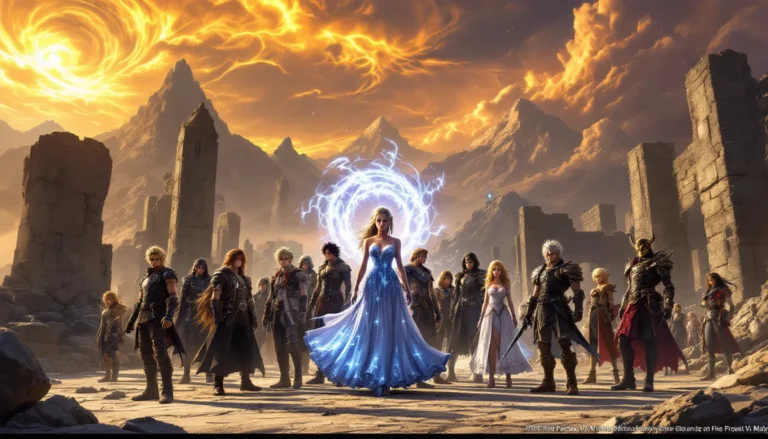
Final Fantasy Tactics Advance hit Nintendo Switch in 2023, bringing Square Enix’s tactical masterpiece to a new generation of gamers on a portable platform. Whether you’re revisiting Ivalice or experiencing the game for the first time, the Switch version serves up everything that made the original Game Boy Advance classic special, with some modern quality-of-life tweaks and handheld convenience. The game’s blend of turn-based tactical combat, job system depth, and a sprawling single-player campaign makes it a standout choice for anyone who craves strategic gameplay without the commitment of a live-service grind. This guide breaks down what you need to know to master Final Fantasy Tactics Advance on Switch in 2026, from your first skirmish to endgame clan battles.
Table of Contents
ToggleKey Takeaways
- Final Fantasy Tactics Advance on Switch delivers 60–100+ hours of story-driven tactical gameplay without battle passes, FOMO mechanics, or live-service elements, making it ideal for players seeking complete single-player experiences.
- The job system’s flexibility allows units to master multiple jobs and equip abilities across classes, creating emergent team-building opportunities where experimentation is rewarded more than rigid meta templates.
- The law system transforms tactical missions by imposing strategic constraints like ‘No Magic’ or ‘Reduced Healing,’ forcing players to adapt team composition and approach each encounter differently rather than relying on brute-force strategies.
- Quality-of-life improvements including fast-forward animations, quicksave mid-mission, persistent battle logs, and customizable difficulty settings streamline the experience while respecting the original GBA design.
- Clan battles serve as the endgame’s primary longevity pillar, offering dozens of hours of postgame content where players optimize units, test unconventional builds, and compete against varied opponent compositions.
- The Switch port’s handheld mode and turn-based flow create an ideal portable experience, allowing 20–40 minute tactical missions to pause seamlessly without losing momentum during commutes or daily downtime.
What Is Final Fantasy Tactics Advance?
Game Overview And Heritage
Final Fantasy Tactics Advance (FFTA) originally debuted on the Game Boy Advance in 2003 and quickly became a cult classic in the tactical RPG space. The game drops you into Ivalice, a fantastical world that mirrors medieval Europe and high-fantasy tropes, where your character Marche and his crew tumble headfirst into a world of magic, monsters, and political intrigue after a mysterious book appears.
Unlike traditional turn-based RPGs where you navigate dungeons and encounter random battles, FFTA operates as a fully tactical board game in 3D isometric perspective. Every move matters. You position units on gridded maps, manage range and cover, exploit elemental weaknesses, and watch turn order play out strategically rather than relying on brute-force stats. The depth of the job system, switching between classes like Knight, Thief, Black Mage, and dozens of others, means team composition and build variety fundamentally shape how you approach each mission.
The narrative hits different compared to mainline Final Fantasy titles. It’s grounded in personal stakes: Marche’s relationship with his brother, his friendships, and the consequences of his choices ripple throughout the story. The game doesn’t shy away from moral complexity either. Without spoiling anything, the narrative reframes what victory means in ways that stick with you long after the credits roll.
On a mechanical level, FFTA sits between pure strategy games (like Fire Emblem) and party-based RPGs. You control up to four units on the field at once, but you can recruit and level dozens of characters. This flexibility means experimentation is rewarded, build a full mage squad, or go all-in on melee bruisers, or mix and match. The job mastery system encourages long-term investment too. As your units level jobs, they unlock new abilities to equip on other jobs, creating an emergent meta where theorycrafting becomes part of the fun.
Why It Matters For Nintendo Switch Players
The Switch release was a long time coming. After FFTA’s original GBA run and a sequel on the DS, Square Enix shelved the series for over a decade. The 2023 Switch port, bundled as part of Nintendo’s retro initiative, made a tactical classic accessible again, but it came to a platform that desperately needed more premium single-player strategy games.
Switch’s handheld nature is perfect for FFTA’s design. Tactical battles can stretch 20–40 minutes, depending on map complexity and your playstyle. Handheld mode lets you take Ivalice with you, pause mid-mission when life interrupts, and grind clan battles during commutes without losing momentum. Unlike action-heavy titles that demand constant inputs, FFTA’s turn-based flow rewards methodical, thoughtful play, exactly what you want when playing portably.
The game’s longevity matters too. FFTA isn’t about completing the main story in 30 hours and shelving it. You’re looking at 60–100+ hours of content between the campaign, side missions, law system challenges, and clan battles. For Switch owners, especially those tired of live-service game loops, FFTA’s complete, offline experience feels like a breath of fresh air.
On a meta level, the Switch port proved there’s still hunger for tactical RPGs with real depth. When Final Fantasy 12 (which has its own hybrid turn-based and real-time systems) saw success on modern platforms, FFTA’s arrival signaled Square Enix listening to what audiences wanted: complete, story-rich tactical experiences without battle passes or FOMO mechanics.
Switch Version: What’s New And What’s Stayed The Same
Graphics And Performance Upgrades
The Switch version runs at 1080p in docked mode and 720p in handheld, targeting 60 FPS during most gameplay. That might sound modest compared to current-gen consoles, but FFTA’s art direction, hand-drawn character sprites layered over 3D environments, holds up remarkably well. The visual style was intentional, even back in 2003. The game leans into a storybook aesthetic rather than chasing photo-realism, which means age hasn’t diminished its charm.
Switch performance stays rock-solid during tactical missions. The grid-based, turn-based flow means you’re not dealing with action-game jank. Menus load snappily, animations play smoothly, and there’s no stuttering during ability effects or unit movements. Attack animations can be toggled on or off for speed-runners who’ve seen them a thousand times, which is a quality-of-life win.
Aesthetically, the Switch port includes improved UI scaling for smaller handheld screens, cleaner text rendering, and updated button mapping that feels native to the controller rather than ported from mobile. Load times are minimal, crucial for a game where you’re swapping between menus, battles, and the overworld frequently.
New Features And Quality-Of-Life Improvements
The 2023 Switch version adds several QoL features that the original GBA version desperately needed. The most significant? A proper fast-forward button for animations and enemy turns. On GBA, you were stuck watching every action play out in real-time. Now you can speed up enemy AI turns, ability animations, and movement sequences, cutting mission time down significantly for veterans.
Quicksave functionality lets you save mid-mission, which sounds minor but transforms how you approach difficulty spikes. You’re not forced to restart 20 minutes of progress if a single turn goes sideways. For tactical games where positioning mistakes can snowball, this is genuinely helpful.
The battle log is now persistent and searchable, so you can track what happened three turns ago without relying on memory. Difficulty adjusters allow you to tweak enemy stats, your unit stats, and law system severity, giving players agency over their experience. Want the story without grinding? Enable stat boosts. Want brutally hard? There are toggles for that too.
Autosave between battles prevents save-scumming punishment if you quit unexpectedly. The map selection interface has been streamlined, no more hunting through nested menus. Control remapping is fully customizable, which matters for players who prefer unconventional button layouts.
One thing to note: the core gameplay loop hasn’t changed. These are refinements, not reimagining. FFTA on Switch is faithful to the original’s mission structure, story beats, and balance. That’s intentional. Square Enix respected the source material rather than retrofitting modern trends.
Getting Started: Essential Beginner Tips
Character Classes And Job System Explained
Final Fantasy Tactics Advance uses a job-based class system where units can switch jobs and permanently learn abilities tied to those jobs. This is the game’s hidden complexity, and its greatest strength.
Each unit has a primary job (like Knight, Black Mage, or Archer) and can equip two “Abilities” from previously mastered jobs. As they level a job, they gain access to new techniques and passive buffs. Master Black Mage, and you unlock Fire, Blizzard, and Flare. Equip Flare on your Knight, and suddenly your melee fighter can nuke from range.
Early on, you’ll want balanced coverage. Your starting party should include at least one healer (White Mage), one damage dealer (Black Mage or Thief), and one tank (Knight or Paladin). But here’s the key: every job has viable endgame builds. Archers, Hunters, Monks, Moogles, they’re all competent if you understand the job system’s interaction with abilities.
Don’t overthink early jobs. Experiment. The game’s mission structure allows you to retry easily, so testing a weird party composition teaches you more than reading a guide ever will. There’s no “wrong” team at beginner difficulty.
Recruit early and often. You can hire up to 24 total clan members (initially just four in the active squad). Recruiting costs Gil (the in-game currency), and new hires start at level 1. This sounds bad, but low-level units grind quickly in early missions. More importantly, recruitment diversity prevents playstyle stagnation. A second White Mage with different ability loadouts than your first creates totally different tactical options.
Combat Fundamentals And Law System Mechanics
Most tactical games are straightforward: move a unit, attack, end turn. FFTA adds wrinkles. The Law System is the most controversial mechanic for newcomers, and it’s essential to understand from the jump.
Each mission has 1–3 active laws. These are restrictions that apply to both you and enemies. Typical laws might be “No Magic,” “No Jumping,” or “Reduced damage from ranged attacks.” Break a law, and your unit becomes Frozen for two turns, completely unable to act. It’s brutal and unintuitive at first.
Here’s the thing: laws aren’t designed to punish. They’re designed to reshape tactical options. A “No Magic” law forces you to approach a mission differently than you normally would. Instead of relying on your Black Mage’s damage output, you’re pivoting to physical damage. It sounds restrictive, and it is, but it’s also brilliant game design disguised as punishment.
Early missions have lenient laws. You’ll get a feel for how they work before facing truly punishing combinations. Pro tip: Read the laws before confirming a mission. If the law combo feels unbearable, you can bail without consequence and return later with better-leveled units.
Combat flow: Units take turns based on speed stats and turn order displayed on-screen. Each unit gets one action: move and attack, move and use an ability, or move and use an item. Range matters. A Thief attacking from two tiles away might miss. A Knight attacking adjacent foes is reliable. Terrain affects movement and line-of-sight. Standing on elevated terrain gives range advantages.
Status effects are game-changers. Poison, Sleep, Immobilize, Charm, these swing battles. A single Sleep on an enemy wizard before they act can save the mission. Building teams with access to diverse status effects pays dividends.
Early Game Strategy And Progression
Your first 5–10 missions are tutorials wrapped in gameplay. Marche’s party (Marche, Montblanc, Ritz, and Doned) carries you initially. Don’t stress optimization. The game teaches you mechanics gradually.
Grinding is optional but useful. Clan battles are optional skirmishes against other clans. They provide no story progression but reward experience and loot. If you’re stuck on a main mission, grinding clan battles for two levels often makes the difference. The game never forces it, you choose when to engage.
Positioning beats stats. A level-5 unit in ideal positioning (flanking enemies, using terrain) outperforms a level-10 unit standing in the open. Early on, learn to use cover, elevation, and spacing to your advantage. That habit carries through the entire game.
Ability diversity matters more than unit level. A low-level Thief with Sleep ability can solo clutch moments if Sleep lands. Don’t dismiss “weak” jobs. Every job has a niche if you build around it.
Gil management: Early missions reward modest Gil. Spend it on ability upgrades for your key units (increasing hit chance or damage output) rather than hoarding. As the game progresses, you’ll have more Gil than you know what to do with anyway.
Story missions vs. side missions: The main story progresses linearly, but side missions unlock gradually. Side missions are optional, you can skip them and return later. They reward equipment and ability stones (which unlock new abilities permanently). For first-time players, focusing on story missions then circling back to side content is a natural progression.
Advanced Strategies For Seasoned Tacticians
Mission Types And Optimal Team Composition
Once you’ve logged 20+ hours, you’ll notice distinct mission archetypes, and FFTA rewards tailored team composition for each. The game doesn’t lock you into specific unit selections, you’re building for the encounter.
Assassination missions have a single high-priority target (usually a powerful enemy). These favor burst damage and control. Bring Black Mages for crowd control spells, Monks for high DPS, and a healer. Eliminate priority targets before they multiply. Units with single-target kill-shot abilities (like Assassinate from the Thief line) shine here.
Defense missions have you protecting NPCs or holding ground. You need tanky units with damage mitigation (Paladins with Aegis, Knights with high Defense stats). Healers become MVP material, keeping your frontline alive beats raw damage output. Control abilities matter less: sustainability matters more.
Escort missions require you to protect a weak unit moving across the map. Bring speed-heavy squads to screen the escort unit and kite enemies away. Ranged units (Archers, Black Mages) maintain distance while melee units cluster defensively around the escort. This is where positioning discipline becomes critical.
Clan wars pit you against rival player clans with mixed units. These are unpredictable, so flexibility beats specialization. Bring one-two dedicated damage dealers, one healer, and one utility unit (someone with crowd control or status effects). Expect enemy compositions to vary wildly.
Boss encounters often have unique mechanics, specific weaknesses, environmental hazards, or reinforcement waves. Research the boss’s moves beforehand through side conversations or past battles. Bring units with relevant resistances or healing coverage. Boss battles reward preparation more than mechanical skill.
Optimal team composition shifts with laws too. Under “No Magic,” your Black Mage becomes a liability, not an asset. Swap them for a physical damage dealer. This flexibility, rebuilding teams for specific challenges, is where FFTA’s depth truly shines. The game doesn’t reward rigid team templates: it rewards adaptability.
Mastering The Law System And Breaking Rules
The Law System transforms from frustrating to brilliant once you reframe it. Laws aren’t punishment, they’re constraints that create emergent gameplay.
Breaking laws strategically becomes an advanced tactic. You get one free rule break per mission (the second freeze is permanent). Sometimes, breaking a law is worth the penalty. If your unit would die without casting Magic, break the “No Magic” law and accept the two-turn freeze. You’ve traded temporary immobilization for survival.
Certain abilities and items can suppress laws temporarily. Specific spells or equipment provide immunity windows. Mastering this interaction, using a law-immunity ability, executing a critical action, then losing immunity, requires planning but turns the law system into a puzzle to solve rather than a wall to avoid.
Laws interact with job abilities too. Some abilities bypass laws. A Knight’s Guard ability (damage mitigation) works under “No Abilities” laws. A Dancer’s physical attacks work under “No Magic.” Building units with ability coverage that spans different law conditions creates flexibility.
Advanced theory-crafting: High-level clan battles introduce brutal law combinations like “No Abilities + Reduced Healing + No Summoning.” Beating these requires deep knowledge of which units can function under these conditions. Monks (pure physical damage), basic Attack commands, and conservative positioning become the baseline. It’s puzzle-solving at its finest.
For new players, laws feel oppressive. For veterans, they’re the game’s most engaging design decision. Treat them as challenges to overcome rather than roadblocks.
Clan Battles And Competitive Play
Clan battles are your endgame playground. After completing the main story, clan battles become the reason you keep playing. They’re optional skirmishes against rival clans, and they’re where you test your team composition, ability synergies, and tactical skill against varied opponents.
Clan progression works like this: Your clan starts at rank 2. Winning clan battles earns points. Hit certain point thresholds, and you rank up (max rank 5). Higher ranks unlock tougher opponent clans with better stats and more refined ability loadouts. Ranking up is entirely optional, you’re not forced into harder content.
Reward structure: Winning clan battles grants Gil, experience, and loot (weapons, armor, ability stones). Loot is the primary motivation. Ability stones unlock permanent new abilities across all jobs. Weapons and armor provide stat boosts and passive effects. Over time, grinding clan battles optimizes your units’ stats and ability access.
Clan wars between players (if playing online features, where available) pit your clan against others’ squads. These are high-stakes battles showcasing optimized builds. Top clans use specific meta compositions, high-DPS Monks, dedicated Healers (usually White Mage or Dancer with healing), and control-focused Black Mages or Summoners.
The meta isn’t rigid though. Unconventional builds, full Thief teams with Sleep spam, Archer-heavy ranged squads, or pure damage-focused lineups, have won against established meta teams through superior player skill and creative ability combinations.
Preparation tips: Before challenging higher-rank clans, ensure your units have relevant resistances to common enemy abilities. If facing a Summoner-heavy clan, equip Summoning resistance. If facing burst-damage teams, prioritize healing coverage. Research opponent clans’ rosters beforehand to prepare counterbuild units.
Clan battles demand more patience than main story missions. You’re learning enemy patterns, testing positioning, and refining strategies. Some players grind the same clan battle 30+ times to perfect execution. It’s not for everyone, but for tactical enthusiasts, it’s endgame nirvana. Recent reviews on Metacritic praised the clan battle system as the game’s longevity pillar, noting it offers dozens of hours of postgame content.
Unlocking Secret Content And Post-Game Content
Hidden Classes And Jobs
FFTA’s job system has hidden depth. You unlock most jobs naturally through story progression and recruiting different unit types. But several powerful jobs are secrets.
Paladin (the upgraded Knight) requires a Knight to reach level 10 and then using a specific item on them. Paladins trade raw offense for tank utility, shields (damage reduction), Holy light attacks, and healing support. Paladin is arguably the best tank in the game and requires intentional leveling to unlock.
Dragoon (Dragon Rider) hides behind specific recruitment conditions and level thresholds. Dragoons deal massive area damage and can move multiple times per turn under certain conditions. They’re glass cannons but incredibly rewarding to master.
Samurai requires finding a specific character and recruiting them as a special unit. Samurais have high-risk, high-reward mechanics, powerful attacks that risk backfiring but devastating when they connect.
Morpher (shape-shifter class) is arguably the game’s secret best job. It transforms into different forms, each with unique move sets and stat changes. Morpher is deceptively overpowered in clan battles once you understand its mechanics.
Unlocking these requires exploration, talking to NPCs, and completing optional side missions. The game doesn’t spoonfeed their locations. Discovering them is part of the fun, especially in 2026 when walkthroughs aren’t the first result when you Google a question. Trial-and-error, community discussion, or stumbling upon them naturally builds investment in your team.
Classes also have hidden ability combinations. A Dragoon equipped with Monk abilities becomes even deadlier. A Paladin with Healing spells from White Mage becomes unkillable. These combinations don’t emerge without experimentation, exactly what the game rewards.
New Game Plus And Extended Replayability
New Game Plus mode unlocks after beating the final boss. It lets you restart the story with all your units, abilities, and items intact. Your clan rank resets, but your squad’s power doesn’t. This creates a drastically different campaign experience, main story battles that challenged you first playthrough become trivial.
Why replay? Several reasons. First, story replay with different team compositions tests strategies. Second, New Game+ missions (bonus challenges unavailable first playthrough) reward exclusive items and abilities. Third, some players enjoy speedrunning the story on harder difficulty settings.
The replayability ceiling is high. Combine hidden job unlocks, ability synergies, alternative team compositions, clan battles, and optional side missions, and you’re looking at 100+ hours of unique gameplay. FFTA isn’t a 40-hour story and done, it’s a tactical sandbox rewarding experimentation.
Clans themselves add replayability. Some players run multiple clan profiles, each with different thematic lineups, an all-Moogle clan, an all-Undead clan, a min-maxed powerhouse clan. Each plays differently and offers unique challenges.
For reference, Final Fantasy 2 on SNES established many franchise traditions, but FFTA’s job system and modular ability design represent a quantum leap in tactical depth. The Switch port’s accessibility has introduced this system to new audiences who might’ve missed the GBA original, and the replayability foundation means those audiences will be grinding clan battles for years.
The game’s longevity is worth emphasizing: FFTA Switch launched without battle passes, without seasonal content resets, without artificial gates. You’re buying a complete product that respects your time investment. In 2026, that’s increasingly rare for any genre.
Conclusion
Final Fantasy Tactics Advance on Nintendo Switch is a masterclass in tactical RPG design, a 2023 port of a 2003 game that somehow feels fresher than many modern offerings. The job system’s flexibility, the law system’s clever constraints, and the clan battle endgame create a game that respects player agency and rewards both strategic thinking and creative experimentation.
Whether you’re a tactical veteran looking for a portable strategy fix or a newcomer curious about the genre, FFTA delivers. The early game ramps difficulty gently while teaching mechanics. The mid-game opens possibility space with diverse unit compositions and law system puzzles. The endgame offers hundreds of hours of clan battles and optimization.
The Switch version’s quality-of-life improvements, fast-forward buttons, quicksave, persistent battle logs, streamline the experience without compromising the original’s vision. You’re getting a complete, story-rich tactical RPG on a handheld device. No grinding for gacha pulls, no battle passes, no daily reset mechanics. Just you, your clan, and the world of Ivalice.
If you’re hunting your next 100-hour investment, FFTA is it. Grab it, experiment with unconventional team builds, master the law system, and lose yourself in clan battles. The tactical depth rewards patience, but the payoff is absolutely worth it. For more classic Final Fantasy experiences on modern platforms, exploring titles like Final Fantasy 3 reveals how the series evolved its mechanics over decades, and checking out the Final Fantasy Archives provides deeper context on the franchise’s tactical traditions. Join communities on Pocket Tactics where strategy game enthusiasts dissect builds and share discoveries. FFTA’s waiting.