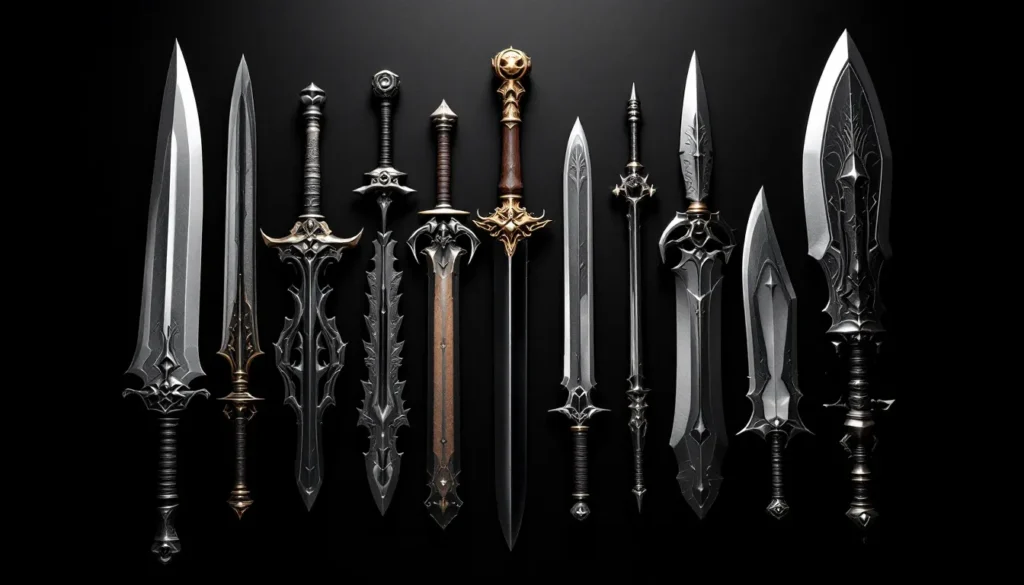
Final Fantasy weapons aren’t just tools, they’re the beating heart of combat, character identity, and storytelling across a franchise spanning nearly four decades. Whether you’re wielding Cloud’s Buster Sword for the hundredth time or grinding for an Ultimate Weapon that took developers months to balance, your choice of gear fundamentally shapes how you experience Final Fantasy. From the elegant materia sockets of FFVII Remake to the dynamic weapon combos of FFXVI, the series has consistently evolved how weapons function while maintaining their iconic status. This guide covers everything you need to know about Final Fantasy weapons, how they work, where to find the legendary ones, and how to optimize them for your playstyle.
Table of Contents
ToggleKey Takeaways
- Final Fantasy weapons define both character identity and combat playstyle—from Cloud’s Buster Sword to FFXVI’s dynamic weapon switching—making weapon selection crucial to your overall gameplay experience.
- Weapon progression has evolved from simple stat upgrades in classic games to complex systems like FFVII Remake’s materia integration and FFXVI’s ability-gating, where weapon choice determines accessible combat abilities rather than pure damage numbers.
- Ultimate Weapons reward dedication but aren’t mandatory for story completion; understanding stat scaling, materia synergy, and elemental advantages matters far more than chasing rare gear with high rarity tiers.
- Modern Final Fantasy weapon design prioritizes accessibility and playstyle flexibility—offensive, defensive, and hybrid builds are all viable, and skilled players with mid-tier weapons can outperform casual players brute-forcing higher-rarity gear.
- Weapon-specific abilities and Limit Breaks directly influence character performance; investing time into understanding ability synergies, materia combinations, and party composition creates exponentially better results than static power rankings.
Understanding Final Fantasy Weapon Systems Across the Franchise
How Weapon Progression Works in Classic vs. Modern Final Fantasy Games
Weapon progression in Final Fantasy has always been tied to character growth, but the mechanics vary wildly depending on the entry. In the classic era (FFI through FFX), weapons were primarily upgrades with static stats, find a stronger sword, equip it, move on. FFI’s weapon progression was straightforward: Iron Sword → Steel Sword → Silver Sword, each providing incremental stat bumps. FFVII changed the game with Materia slots, allowing players to customize weapons beyond raw damage numbers by adding magical properties and support abilities.
Modern Final Fantasy titles have pushed weapon design into far more complex territory. FFXVI introduced real-time weapon switching mid-combat, where each arm could wield different weapons (sword, axe, hammer, sword-and-shield, or two-handed options), fundamentally changing how players approach combat encounters. FFVII Remake’s weapon upgrade system layered progression through a combination of leveling, passive ability unlocks, and performance improvements tied to specific materia configurations.
The difference in approach matters for gameplay pacing. Classic games front-load weapon grinding early in the story, then taper off once you obtain mid-tier gear. Newer entries stretch weapon progression across the entire campaign, with late-game weapons requiring investments that rival optional boss encounters in difficulty.
The Role of Weapon Rarity and Stats in Combat
Rarity tiers exist to signal power potential, but they’ve never been the complete story. A rare weapon with stats perfectly aligned to your character’s strengths (like high Strength for a physical attacker) will outperform a common legendary weapon that boosts Intelligence on a character with terrible magical growth. FFX’s Celestial Weapons exemplify this: they’re the rarest gear in the game, but require significant investment through the sphere grid to realize their full potential.
Stats themselves have evolved. Early games used straightforward numbers: Strength increases physical damage, Speed increases turn order priority. FFXIV introduced hit ratings and crit damage modifiers that completely changed how players evaluated weapons. FFXVI streamlined stats while emphasizing weapon-specific movesets, where the weapon you choose determines which combat abilities you can access rather than pure numerical superiority.
Critical stats to track include damage type (physical vs. magical), attack speed (TTK considerations for high-demand fights), and secondary effects like status chance or elemental properties. Understanding stat scaling for your chosen character matters more than chasing rarity alone. The Final Fantasy 14 Map: Uncover Hidden Treasures and Epic Adventures guide shows how endgame players prioritize stat distributions for raiding content, which applies conceptually across the franchise.
Iconic Legendary Weapons Every Final Fantasy Fan Should Know
The Buster Sword and Cloud’s Legendary Arsenal
Cloud Strife’s Buster Sword is Final Fantasy’s Excalibur, the weapon that defined not just one character, but the franchise’s identity in mainstream gaming. Introduced in FFVII (1997), the oversized katana-hybrid has become synonymous with Cloud to the point where few gamers can picture him without it. The design carries weight both literally and narratively: it’s massive, it’s unwieldy, it’s perfect for a character carrying emotional baggage.
In FFVII, the Buster Sword serves as your starting weapon, which is unusual for legendary gear. Most JRPGs relegate powerful weapons to late-game status, but Square understood that Cloud’s connection to this blade needed to be established immediately. As you progress, you upgrade it: Motor Drive → Hardedge → Apocalypse, each version stat-gated behind story progression. The Buster Sword represents growth in a way pure DPS increases don’t.
FFVII Remake revitalized the weapon system entirely. The Buster Sword still starts as Cloud’s tool, but upgrading it now involves material grinding, slot customization with materia, and unlocking specific Weapon Abilities through combat. Early-game Ability Materia improvements are minimal, but investing materials into the Buster Sword’s ability trees reveals powerful combos. The Final Fantasy Cloud Sword: explores this in depth.
Cloud’s full arsenal in Remake includes the Buster Sword, Hardedge (balanced DPS), Motor Drive (fast, status-focused), and Iron Blade (heavy, strength-scaled). Many players stick with Buster Sword throughout because its upgrade potential rivals specialized weapons, proving that legendary status doesn’t always mean endgame exclusivity.
Sephiroth’s One-Winged Angel and Iconic Final Fantasy VII Weapons
Sephiroth’s One-Winged Angel theme didn’t just capture a character, it defined what a villain’s weapon should sound like in gaming. His Masamune is the counterweight to Cloud’s Buster Sword: where Cloud’s blade is massive and crude, Sephiroth’s is elegant and precise. The Masamune carries actual mythological weight (samurai weapon inspiration) while remaining distinctly Final Fantasy.
The Masamune isn’t accessible as a player weapon until endgame (or postgame in some versions), making it a genuine reward rather than a gimme. In FFVII, obtaining the Masamune requires navigating the Sunken Gelnika in the northeastern Continent, a late-game secret optional encounter. The sword’s stats reflect its rarity: +50 to Strength and +5 to Magic, making it phenomenal for Cloud-focused builds but weak for magic-heavy parties.
Beyond Sephiroth and Cloud, FFVII featured weapons that mattered. Barret’s Ultimate Weapon, Barret’s Cosmo Memory, required one of the most tedious grinds in JRPG history until players realized its damage scaling benefited from his level and Limit Break investments. Aerith’s Final Heaven became iconic for entirely different reasons: it’s the weapon she can equip during the game’s most pivotal emotional moment, making it narratively powerful even though middling DPS. Final Fantasy Villains: Unforgettable Antagonists That Define the Series contextualizes why Sephiroth’s weapon design resonates so deeply.
These weapons established a tradition: Final Fantasy weapons tell stories. They’re not interchangeable tools: they’re extensions of character and plot. That principle carries through every mainline entry and explains why fans obsess over weapon design even decades after release.
Ultimate Weapons: Finding and Crafting the Most Powerful Gear
Requirements and Challenges for Obtaining Ultimate Weapons
Ultimate Weapons represent peak character power in most Final Fantasy games, but accessing them requires commitment beyond standard progression. These weapons appear under different names, Celestial Weapons in FFX, Chaos Weapons in Final Fantasy Type-0, Lv. 1 Weapons in FFV, but they share common traits: rare drop chances, enormous gil investments, or completion of optional superbosses.
FFX’s Celestial Weapons are the gold standard for how challenging Ultimate Weapons should be. Each character has one, and obtaining all ten demands clearing the Monster Arena (defeat 10 fiends, 30 different species, 3 species at once, and 4 species at once), racing through Chocobo races with brutally strict time limits, and surviving optional superbosses like Penance (a secret boss with 24 million HP that requires flawless execution). The rewards, weapons that scale with Overdrive Mode and grant character-specific Aeons, don’t trivialize endgame content, but they’re mandatory for post-game achievements.
FFVII Remake’s Ultimate Weapons have fewer gatekeeping mechanics but demand different resources. To obtain each character’s final weapon, you need Weapon Upgrade Material (Purple Titanium), Mag-Rolling materials, and AP investment for materia sockets. The challenge isn’t a puzzle: it’s time investment. FFVII Remake also introduced item scarcity, certain upgrade materials only drop from specific enemies or Harder difficulty settings, forcing players to optimize farming routes or replay chapters on higher difficulties.
Recent entries like FFXVI scaled back Ultimate Weapons entirely. Instead of one super-rare weapon, players collect multiple legendary gear pieces that unlock through story completion, optional superboss encounters, and New Game+ modes. This design choice prioritizes accessibility without sacrificing accomplishment: casual players still feel progression, while hardcore players find achievable targets.
Weapon Enhancement and Materia Integration Strategies
Enhancing weapons separates dedicated players from casuals. In FFVII Remake, materia combinations define combat effectiveness more than base weapon stats. A Buster Sword with Fire + Lightning Materia linked to Synergy performs differently than an upgraded Hardedge with Healing + Regen materia. Understanding passive bonuses and AP generation speeds matters more than chasing the next weapon tier.
The most important enhancement principle: scale investments to your playstyle. If you’re running a magic-heavy party, enhance weapons with Magic Materia slots first. Physical-focused teams should prioritize Ability Materia and Limit Break frequency. FFVII Remake’s Final Attack Materia is broken with aggressive builds, linking it to Omnislash spam creates a damage engine that trivializes most encounters.
FFXIV players optimize weapon enhancement through Tomestone grinding and weekly raid locks. Weapons need weekly upgrades through Cactuar Spines and Claw Spikes, creating a predictable progression that rewards consistency over grind intensity. The Final Fantasy 12 PC: demonstrates how older entries reward optimization: gambits (NPC strategy presets) synergize with specific weapons, making “best” weapon choices dependent on your board configuration.
Enhancement strategies shift with content difficulty. Story playthroughs reward exploration and experimentation. Superboss runs demand hyperspecific builds where weapon choice and materia configuration lock you into particular strategies. Post-game content in FF titles rewards players who understand stat scaling and elemental advantages: taking the wrong weapon type into an encounter with opposing elemental resistance creates genuine mechanical friction that no gear level overcomes.
Weapon-Specific Abilities and Limit Breaks That Define Gameplay
How Unique Weapon Skills Shape Character Performance
Weapon Abilities separate generic “attack harder” mechanics from character identity. FFVII Remake weaponizes this concept (pun intended): each weapon grants two exclusive Ability Materia that unlock through combat usage. Cloud’s Buster Sword learns Focused Thrust (gap closer, high stagger), while Hardedge teaches Punisher Mode (defensive counter mechanic). These aren’t stat variations: they’re fundamentally different combat approaches.
The design intentionally encourages player experimentation. You’re not optimizing for one “best” Cloud loadout: you’re choosing which of three weapon styles matches your combat rhythm that particular encounter. Speed-focused players lean Motor Drive’s fast strikes and status effects. Defensive players favor Iron Blade’s heavy hits and counterattack opportunities. This weapon-as-playstyle philosophy is brilliant because it makes weapons feel personal rather than prescribed.
FFXVI extended this further with the Eikon system. Each weapon grants access to different Eikon abilities (summon-adjacent powers tied to mythological figures). The Broadsword unlocks Titanic Grind, the Spear unlocks Wyvern’s Favor. Building your combat kit requires choosing which weapon to pair with which Eikon ability, creating thousands of viable loadout combinations. Game8 maintains updated tier lists for FFXVI builds that showcase how weapon selection cascades into broader strategy.
The meta shifts when developers balance patch updates. FFVII Remake added Weapon Ability upgrades in Final Fantasy VII Rebirth, fundamentally changing which weapons remained optimal. Motor Drive went from viable early-game speed option to endgame viable through Weapon Ability scaling. Players who invested early into understanding ability mechanics adapted faster than those expecting static power rankings.
Unlocking and Maximizing Limit Break Potential
Limit Breaks are Final Fantasy’s signature mechanic, and weapon choice directly influences their power and accessibility. Cloud’s Limit Breaks scale with equipped weapon: a higher-tier weapon increases Limit Break damage and occasionally unlocks new Limit Break forms (as seen in FFVII’s Omnislash Ultimate Limit Break).
FFVII Remake tied Limit Break generation to character performance, not weapon equipped. But, specific weapons amplify Limit Break generation through passive materia effects. Linking Prayer Materia with weapon Slots that generate Prayer grants faster Limit Break meter recovery. This pushes players toward understanding materia synergy beyond obvious element-stacking strategies.
FFX’s Limit Break system (Overdrive) showed how weapons interact with special mechanics. Celestial Weapons grant Overdrive effects that trigger under specific conditions (dying, damage dealt). The Aeons (summon abilities) attached to Celestial Weapons become Overdrive machines that trivialize superboss encounters, not because stats are broken, but because Overdrive damage stacking creates exponential scaling. Optimizing Celestial Weapons means chaining Overdrive triggers into screen-covering damage spikes.
FFXIV players chase Relic Weapons specifically because of glamour (cosmetic appearance) and weapon-specific Limit Breaks in raids. Relic Weapon glow effects are pure bragging rights: they signal endgame progression without numerical power creep. This design philosophy prioritizes aspirational rewards over power inflation, players chase the look, not the stats.
Maximizing Limit Break potential demands understanding your party composition. Solo characters (like Cloud in parts of FFVII Remake) scale Limit Break generation differently than support roles. Weapon selection should amplify your party’s Limit Break synergy: if your team needs healing, Aerith’s weapon should prioritize Prayer frequency. If your party needs sustained offense, invest weapons that accelerate Cloud’s Limit Break meter.
Final Fantasy Weapons in Recent Titles: FFXVI, FFVII Remake, and Beyond
Modern Weapon Design and Combat Mechanics in Latest Releases
FFXVI completely reimagined weapon progression for 2023’s release. Instead of statistical upgrades or materia customization, weapons are playstyle gates: choosing a weapon determines which combat abilities you access. Choosing a sword, axe, or hammer dramatically shifts your moveset, with separate upgrade trees for each weapon type. This design prevents build homogenization while forcing intentional weapon selection rather than equipping whatever has the highest number.
The genius of FFXVI’s system: you can viably complete the entire game with any weapon type. A player using only an axe never feels underpowered compared to sword-focused builds: they’re just approaching encounters differently. Challenge difficulty modes prove this, speedrunners consistently shift weapons based on specific boss mechanics, optimizing DPS patterns rather than brute-forcing damage numbers. This is how modern Final Fantasy design should function: skill matters more than gear.
FFVII Rebirth (2024) refined Remake’s materia system by introducing Ability Synergy, where specific materia combinations unlock bonus effects beyond individual materia properties. Pairing Fire + Synergy Materia grants additional damage multipliers. This deepens the materia optimization minigame without requiring obsessive spreadsheet analysis.
FFXIV’s weapon evolution mirrors WoW’s approach: patches introduce new weapon rarities (Augmented Extremes, Savage Raid drops, Ultimate Weapons) that create predictable progression tiers. A casual player can be entirely viable with Extreme raid weapons. A hardcore raider needs Ultimate weapons to parse (perform damage metrics testing) at top levels. This stratification respects both playstyles while maintaining separate power levels.
Recent entries consistently favor accessibility over gatekeeping. Story weapons are functional through entire campaigns. Optional weapons provide lateral progression (different playstyles, not pure power increases). Ultimate weapons reward dedication but never feel mandatory for story completion or casual multiplayer content. This is a stark contrast to FFX, where Ultimate Weapons often trivialized endgame content to the point where casual players felt locked out of optimal strategies.
The industry trend toward weapon abilities and playstyle differentiation reflects broader JRPG evolution. Twinfinite recently analyzed how Final Fantasy influenced modern soulslike weapon design, where weapon choice fundamentally changes how players approach combat encounters. Elden Ring borrowed the “weapon as playstyle” philosophy: Final Fantasy pioneered it, then abandoned it for decades before reviving it with FFXVI.
Building Your Perfect Arsenal: Tips for Selecting Weapons by Playstyle
Offensive, Defensive, and Hybrid Weapon Strategies
Offensive-Focused Builds:
These prioritize DPS and fast TTK (time-to-kill) against bosses and superbosses. In FFVII Remake, this means equipping Cloud with Motor Drive or Hardedge + Synergy Materia + Prayer frequency materia to chain Limit Breaks into Omnislash spam. FFXVI players choosing swords unlock Abilities focused on gap-closing, stagger damage, and multi-hit combos. FFX players hunting Celestial Weapons stack Strength-based equipment and Aeon Overdrives to maximize burst damage windows.
The key offensive principle: stack effects that multiply each other. A 20% damage bonus from weapon + 15% from materia + 10% from passive effects creates 48% total scaling (multiplicative math), not 45%. This separates optimized offensive builds from casual setups.
Defensive-Focused Builds:
Defense isn’t about blocking attacks (though some weapons support counter mechanics). It’s about sustain, healing, damage reduction, status immunity, and survivability against multihit attacks. FFVII Remake support characters (Barret, Aerith) should equip weapons with Prayer Materia slots and healing-oriented Ability Materia. FFXVI defensive builds use hammers (high stagger, slow attacks allowing breathing room) paired with defensive Eikon abilities.
FFXIV’s tanks legitimately tank through weapon block chances, but optimizing defensive capabilities requires understanding enemy attack patterns. A warrior with a shield weapon is objectively more defensive than a warrior with a two-handed axe, but a skilled warrior with an axe survives through positioning and cooldown management rather than passive damage reduction.
FFX’s defensive strategy revolves around status immunity. Equip weapons that grant Protect, Shell, or Haste to your party. The Aeons (summons) function as pseudo-tanks, summon them to absorb damage while your party recovers HP and MP. This weapon selection completely changes how you approach encounter difficulty.
Hybrid Builds:
Hybrids balance offense and defense, critical for solo characters and characters without dedicated healers. Cloud in FFVII Remake should have access to Prayer Materia (healing) + damage amplifiers, letting him alternate between attacking and healing as party HP demands. FFXVI players mixing sword (balanced offense/defense) with speed-heavy Eikon abilities create flexible responses to encounter phases.
Hybrid weapons matter most in difficulty modes that punish single-strategy approaches. Superboss encounters often require tactical shifts: start aggressive to phase a boss quickly, then shift defensive when mechanics demand party healing. Having weapons supporting both playstyles prevents forced equipment swaps mid-combat.
Practical Selection Framework:
Ask yourself three questions before settling on weapons:
-
What are encounter mechanics? Elemental-heavy boss? Choose weapons with elemental materia. Status-spam enemy? Prioritize status immunity weapons. Heavy AOE attacks? Defensive weapons that grant party-wide damage reduction.
-
What’s your party composition? Solo character? Hybrid weapons mandatory. Full party? Specialize each character, pure offense for DPS, pure defense for tanks/healers. This is obvious in retrospect but easy to miss when equipping characters independently.
-
What’s your skill level? If you’re learning encounters, defensive weapons reduce mistakes’ consequences. If you’re optimizing DPS, offensive weapons force positioning discipline, mistakes kill faster. Matching weapon philosophy to your mechanics knowledge prevents frustration.
The Final Fantasy 2 SNES: featured an equipment system ahead of its time: weapon choice influenced character stat progression permanently. Equipping swords raised sword proficiency: equipping shields raised shield defense. Modern Final Fantasy abandoned this permanence in favor of flexible experimentation, a better design philosophy for players who value respeccing and tactical adjustments.
Conclusion
Final Fantasy weapons transcend mechanical functionality: they’re narrative tools, character extensions, and strategic anchors that define how players experience the franchise. From Cloud’s Buster Sword representing his emotional journey across Midgar to FFXVI’s dynamic weapon switching creating moment-to-moment combat decisions, weapons remain central to what makes Final Fantasy legendary.
The evolution is clear: classic entries treated weapons as numbers on a progression ladder. Modern Final Fantasy treats weapons as playstyle architects, making each choice meaningful beyond pure stats. FFXVI’s weapon-as-ability-gating and FFVII Remake’s materia integration prove that iteration doesn’t mean abandonment, it means deepening systems until weapons feel personal.
Your weapon choice matters more than your gear level. A player understanding materia synergy with a mid-tier weapon outpaces a player brute-forcing Ultimate Weapons without strategy. Whether you’re building toward endgame superbosses, optimizing raid DPS, or simply enjoying the story, selecting weapons that match your playstyle and party composition creates experiences that generic stat-chasing never achieves.
The franchise’s 40-year history shows that weapons aren’t just equipment slots to fill, they’re the physical embodiment of how you choose to play Final Fantasy. Treat them accordingly.