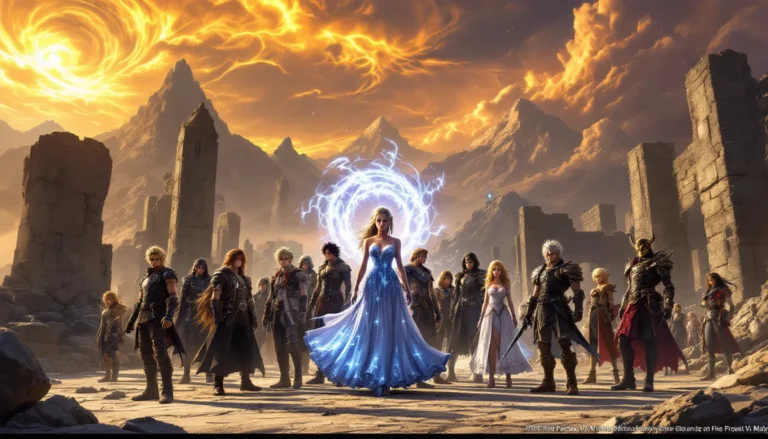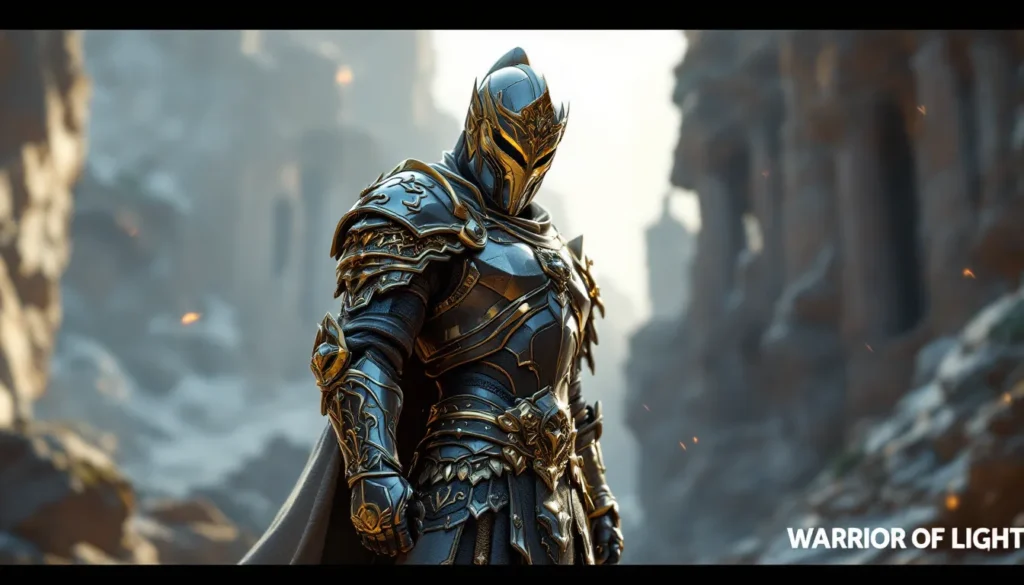
Final Fantasy XIV: Shadowbringers stands as the moment the MMO stopped being “pretty good” and became genuinely unforgettable. Released in July 2019, this third expansion didn’t just add content, it fundamentally elevated what the game’s story could achieve, delivering narrative depth that rivals single-player Final Fantasy titles. The expansion sent shockwaves through the community because it wasn’t just a gear treadmill with a new map: it was a turning point that made people stop comparing FFXIV to other MMOs and start treating it as its own phenomenon. Whether you’re a veteran who dropped off after Stormblood, a hardcore raider eyeing the Savage tiers, or someone curious about what made the gaming community lose its collective mind over a world called Norvrandt, this guide covers every angle that made Shadowbringers the watershed moment in FFXIV’s history.
Table of Contents
ToggleKey Takeaways
- Final Fantasy XIV: Shadowbringers fundamentally elevated the MMO’s storytelling, delivering narrative depth rivaling single-player Final Fantasy games and reshaping how the gaming community perceives MMO stories.
- The expansion’s story-driven design features exceptionally written character arcs, emotional pacing, and a morally complex antagonist in Emet-Selch whose devastating motivations rank among gaming’s most compelling villains.
- Shadowbringers introduced significant gameplay enhancements including complete job redesigns, tightly-balanced raid tiers like Eden Savage, and dungeon encounters requiring genuine mechanical execution rather than gear-carrying.
- The five zones of Norvrandt offer exceptional environmental storytelling and atmospheric design, with each region—from the perpetually bright Lakeland to the crystalline Tempest—reinforcing the expansion’s narrative themes.
- Shadowbringers’ critical success and legacy established the template for all future FFXIV storytelling, making it mandatory content that transformed the game from a solid MMO into one of gaming’s most celebrated titles.
What Makes Shadowbringers Stand Out in the Final Fantasy XIV Universe
Shadowbringers broke the mold in ways that surprised even longtime players. While Stormblood laid groundwork, Shadowbringers executed with precision, weaving narrative, gameplay innovation, and world-building into something cohesive and emotionally resonant. The expansion proved that MMO stories don’t have to be afterthoughts, they can be the main event.
Story and Narrative Excellence
The main story quest (MSQ) in Shadowbringers operates like a proper Final Fantasy game, complete with pacing, character arcs, and genuine plot twists that land because the writing earned them. The first questline introduces players to the First, an alternate world bleeding out of existence due to Primals, summons, uncontrolled consumption of light itself. It’s a clever inversion of traditional Final Fantasy mythology. Light isn’t salvation: it’s apocalypse. That single premise drove two expansions of storytelling and changed how players understood the entire FFXIV universe.
The writing avoids the melodrama that plagued earlier expansions. Dialogue feels purposeful rather than padded. Side quests, rather than being fetch-quest filler, develop lore and secondary characters with genuine care. Players frequently cite specific moments, character deaths, revelations about Ascians, the confrontation with the Warrior of Darkness, as equal to or exceeding standout moments in single-player Final Fantasy titles. According to discussions on community forums and Game8’s meta analysis, the narrative quality single-handedly shifted how the gaming community perceived MMO storytelling as a whole.
Character Development and Emotional Impact
Shadowbringers gave supporting characters actual depth. Thancred, Y’shtola, and Urianger evolve meaningfully across the expansion, not just through plot beats but through how they respond to the weight of the First’s apocalypse. Emet-Selch, the primary antagonist, emerges as one of gaming’s most layered villains. Rather than being an evil monolith, he’s driven by a completely understandable (if destructive) motivation: he’s trying to rebuild a world that was destroyed. His backstory spans millennia, and his relationship with the Warrior of Light complicates every encounter.
The emotional pacing is tight. The expansion doesn’t rely on constant shock moments: instead, it builds dread, hope, and eventually catharsis. The final zones crescendo in ways that make even cynical players lean back and admit, “Yeah, that got me.” The endgame story questline wraps up the First’s crisis while seeding conflicts for Endwalker, proving that Shadowbringers wasn’t just a one-off story beat, it was deliberately architected as part of a larger narrative whole.
Gameplay Enhancements and New Systems
Beyond the story, Shadowbringers streamlined FFXIV’s job design and raid encounters in ways that raised the skill floor and ceiling simultaneously.
Job Changes and Role Adjustments
Shadowbringers overhauled every job in the game as part of the “Role Actions” redesign that began in Stormblood but truly crystallized here. Each role, Tank, Healer, Damage Dealer, received laser-focused abilities that defined their playstyle. Tanks gained more damage output (closing the DPS gap from earlier tiers), Healers regained offensive capability, and DPS jobs became more mechanically distinct from one another.
Specific changes that shaped the meta: Dark Knight received a complete rework that made it genuinely fun instead of feeling like a utility tank. Paladin became the mitigation tank, Warrior the survival tank, Gunbreaker (new class) the high-risk, high-reward tank. Red Mage got massive QoL improvements that made it viable for endgame content, not just casual play. Samurai became a pure melee DPS powerhouse, while Dragoon finally, finally felt relevant in Savage raids after years of being the punchline job.
For Healers, White Mage and Scholar received thoughtful redesigns that separated them mechanically, and Astrologian shifted from a pseudo-healer into something more defined. These changes made job selection feel like a meaningful choice rather than a binary “pick this one, it’s better” scenario.
Dungeon Design and Combat Encounters
Shadowbringers dungeons are tightly designed. Trash packs have meaningful mechanics, they’re not just DPS checks. Boss encounters, particularly in trial fights, demand mechanical execution. The signature trials (Titania and Innocence) feature intricate role-specific mechanics that can’t be carried by raw DPS: everyone has to know their job.
The raid encounters struck a balance that felt fresh. Eden Savage (the eight-player raid tier) offered challenging but fair difficulty. Mechanics telegraphed clearly, DPS checks were tight but achievable, and mechanics had enough complexity that optimization required thought. The difference between a clear time of 8:50 and 8:00 wasn’t just item level, it was execution, resource management, and coordinated role play. This tier lists and build guides on Game8 frequently reference as the standard for well-designed raid tiers.
The Main Story Quest: A Journey Through Light and Darkness
The Shadowbringers MSQ clocks in at 120+ hours for a first-time clear, and unlike earlier expansions, it holds engagement nearly the entire way through.
Early Expansion Content and Initial Quests
The expansion opens with high stakes. The Warrior of Light, Alphinaud, Alisaie, and others arrive on the First via a summoning ritual, only to discover the world is dying. The sky shines with daylight that never ends, eternal noon. The aether saturation from uncontrolled Primals has broken the world’s natural cycles. The first zones (Lakeland, The Tempest in retrospect) establish the threat with environmental storytelling: ruined settlements, desperate refugees, and wildlife twisted by too much light.
Early quests do what Stormblood’s opening neglected, they let players breathe and connect with NPCs before pushing toward “save the world” stakes. Urianger provides comic relief and genuine mechanical knowledge. Thancred’s condition (a blade through his chest, slowly killing him across the expansion) becomes a throughline of urgency. The Scions’ dynamics shift because they’re not on home turf: they can’t lean on established power structures, and that vulnerability makes them more relatable.
The “becoming a Warrior of Darkness” hook appears early. Rather than repeating the Warrior of Light role, players hunt down and convince the original Warriors of Darkness to join the fight. This reframes the Warrior of Light as someone working alongside others rather than solo-carrying the world.
Mid-Expansion Story Arcs and Revelations
Mid-expansion (zones like Il Mheg and Rak’tika Greatwood) deepens lore while escalating stakes. The fae of Il Mheg introduce the concept of dreams and wishes made manifest, thematic setup for larger reveals. Rak’tika’s storyline focuses on the ancient Viis civilization and their connection to Ascian history, particularly their relationship with Emet-Selch.
The critical revelation hits around the 70-hour mark: Emet-Selch isn’t just trying to stop the world from dying. He’s mourning. He’s one of the last survivors of a civilization, the Ascians’ original world, that was destroyed. Every Ascian is centuries old, playing an unseen game to rebuild their lost realm. This recontextualizes everything. The Ascians aren’t generic villains: they’re genocidal survivors trying to resurrect a dead world at any cost. It’s cruel, it’s understandable, and it makes the conflict genuinely tragic.
The Warriors of Darkness subplot becomes central: they’ve been deceived into opposing the Scions, thinking the Warrior of Light is the threat. Their betrayal and eventual reconciliation hits harder because the questline earns it through hours of character work.
The Climactic Finale and Its Aftermath
The final zone, The Tempest, is where everything converges. Emet-Selch’s motivations become crystal clear in cutscenes that rank among the best in the entire franchise. His plan is ambitious and horrifying: use the Warrior of Light’s power to rejoin all the shattered worlds (Source and reflections) back together, wiping out everything that exists now to resurrect what was lost.
The final trial against Emet-Selch across multiple phases is mechanically demanding and narratively satisfying. Every phase represents a stage of his argument with the player. By the end, it’s not just a boss fight, it’s a confrontation with the philosophy he represents.
The aftermath quests don’t vanish after the credits roll. The 24-player alliance raid that concludes Shadowbringers’ story (The Twinning, leading into Copied Factory) extends narrative closure. The Warrior of Light is changed: the world is changed. The ending isn’t “problem solved, next expansion.” It’s “we won, but at what cost?” That emotional residue carried players into Endwalker, arguably feeding the reason that expansion also became critically acclaimed.
Endgame Content and Raid Tiers
Shadowbringers offered multiple raid difficulty tiers, ensuring players of all commitment levels had endgame content that felt rewarding.
The Eight-Player Raid Series: Eden
Eden is the flagship eight-player raid series, split across twelve encounters in Savage difficulty (the hardest tier). The story follows players witnessing the manifestation of Eden, a being of pure creation dreaming reality into existence. It’s conceptually ambitious: players battle Eden’s different forms as it creates and destroys worlds.
Eden Savage Tier 1 (E1S-E4S) features some of the tightest mechanical design of any FFXIV raid tier. E4S, the final encounter of tier one, requires exceptional DPS execution and mechanic management simultaneously. By Game Informer’s coverage of tier difficulty, E4S represented a significant skill check that separated casual raiders from those pushing for speed clears.
Each Eden encounter has distinct mechanics that define its challenge:
- E1S: Introduces role-specific mechanics and tight DPS checks.
- E2S: Spotlights party coordination and stack mechanics.
- E3S: Escalates complexity with phase transitions and multiple mechanics per phase.
- E4S: Combines everything into a three-phase gauntlet that demands flawless execution.
Eden Savage Tier 2 (E5S-E8S) maintains difficulty while introducing new mechanics and elemental phases. E8S, the final encounter, is historically one of the harder eight-player raids FFXIV has released, requiring 8:30-9:30 DPS checks depending on job composition.
Theming is crucial: each tier maps to Eden’s “dream,” so visual design escalates alongside mechanical difficulty. Later phases feature reality-warping visuals, worlds colliding, matter reforming, that make the fight feel appropriately climactic.
Alliance Raids and 24-Player Encounters
Shadowbringers introduced the Copied Factory series, a 24-player raid tier that continued the Nier Automata crossover. Unlike traditional alliance raids (which are significantly easier), Copied Factory splits 24 players into three groups of eight, each facing separate bosses with coordinated mechanics.
The storytelling is integrated with the narrative: as the Warrior of Light explores the mystery of the First, the alliance raid reveals connections to the Nier universe’s themes about creation and destruction. Mechanically, Copied Factory requires more coordination than typical alliance raids but less execution than Savage.
Savage Difficulty and Hardcore Progression
Shadowbringers Savage raids became the gold standard for competitive FFXIV raiding. The difficulty curve was precise: worlds apart from Normal mode, challenging enough to require practice without being punishingly brutal like earlier Savage tiers.
Clear rates during the tier’s lifespan (June 2019–October 2021) showed healthy participation: roughly 5-10% of the player base cleared E12S by the tier’s conclusion, compared to 1-2% for previous hardest raids. This suggests Savage had become more accessible while maintaining genuine challenge.
The meta jobs shifted multiple times across the tier’s lifespan due to balance patches. Early on, Samurai and Dragoon dominated melee DPS. Ranged DPS spots went to casters (Summoner, Black Mage) and physical ranged (Dancer, Machinist). Healers split White Mage and Astrologian for two-healer comps, with Scholar phased out due to DPS scaling mechanics. These meta shifts reflected intentional balance design that encouraged experimentation rather than locking in one “correct” composition.
Exploration and Zones: Regions Worth Discovering
Shadowbringers introduced five main zones, each with distinct visual and thematic identity. The world-building through environmental storytelling is exceptional.
The Norvrandt Continents
The First is divided into several continents, each with its own aesthetic and cultural identity:
Lakeland serves as the tutorial zone, easing players into Norvrandt’s mechanics. The sky is perpetually bright, crops struggle to grow, and refugees gather at camps. Visually, it’s pastoral-meets-apocalyptic: rolling fields under endless daylight create cognitive dissonance that drives the narrative premise.
The Lochs is more mountainous and severe, with volcanic terrain and hostile wildlife. The story here focuses on the miner’s guild and introduces the mechanics of suppressing Light-corrupted creatures.
Il Mheg is the forest zone, home to the fae. It’s bursting with vibrant, bioluminescent colors, vines glow, crystals float, the architecture has organic curves. The zone is thematically important because it represents preservation of beauty and magic in a dying world. Narratively, it introduces the concept of dreams and wishes warping reality.
Rak’tika Greatwood is a dense jungle with Viis ruins, introducing ancient civilizations and deep lore about the Ascians’ past. The aesthetic is darker, moody, stone ruins reclaimed by vegetation, bioluminescent flora creating haunting beauty.
The Tempest is the final zone, accessed only after significant story progression. It’s underwater, crystalline, and hauntingly beautiful. The design feels genuinely alien compared to earlier zones, signaling players are approaching the expansion’s climax. Gematsu detailed the zone design philosophy as intentionally different from previous Final Fantasy XIV areas to emphasize the First’s otherworldliness.
Environmental Design and Atmosphere
Shadowbringers’ zones are denser than Stormblood’s. Each area includes hidden caves, secret alcoves, and narrative environmental details that reward exploration. Standing in Il Mheg’s fae groves or gazing across The Tempest’s crystalline seascapes creates moments where gameplay pauses and players simply absorb atmosphere.
Environmental storytelling runs deep. Abandoned settlements tell stories of evacuation and desperation. NPCs reference the lands they’ve lost. Flora and fauna are twisted by Light aether, creating visual language for the expansion’s threat. The lighting itself is a narrative device: zones are perpetually overlit, casting harsh shadows, creating an unsettling sense that something is fundamentally wrong with the world’s natural order.
Zone music (composed primarily by Masayoshi Soken) amplifies this. Each area’s theme echoes leitmotifs that build across the expansion, creating musical continuity that deepens immersion. The music often shifts between hope and despair, mirroring the narrative’s tonal balance.
Optional Content and Side Activities
Shadowbringers offered deep optional content for players seeking challenges beyond the MSQ and raid tiers.
Deep Dungeons and Challenging Solo Content
Palace of the Dead and Heaven-on-High (its Shadowbringers continuation) provide roguelike dungeon experiences. Heaven-on-High escalates difficulty significantly compared to Palace of the Dead, introducing new enemy mechanics and bosses that punish button-mashing. Solo players seeking genuine mechanical challenges found these dungeons rewarding.
Unreal Trials debuted in Shadowbringers’ latter patches, offering challenging solo or group boss encounters designed to test player skill. These trials reuse older boss designs but crank difficulty significantly, requiring players to understand fights at a deep level. Unreal Titania, for instance, becomes a genuine endgame DPS check when soloed.
Eureka Pagos (technically from earlier patches but expanded) offers a full island exploration experience with group events, rare spawns, and cosmetic rewards. Players forming “Eureka static” groups pursued this content for weeks, creating community alongside gameplay.
Crafting, Gathering, and Economic Systems
Shadowbringers expanded crafting and gathering with new materials, new recipes, and new gear tiers. The economy shifted as raid content demanded crafted gear: raid DPS gear could be augmented with crafted materia, incentivizing gathering and crafting for raiders.
Ishgardian Restoration (added mid-expansion) turned crafting/gathering into a narrative story. Players contributed to rebuilding Ishgard through turn-ins, unlocking story beats and cosmetic rewards. This system proved successful enough that it inspired similar content in later patches.
Wealthier players could commission crafters to produce optimal raid gear immediately, while others farmed materials themselves. The economic equilibrium wasn’t perfect but offered multiple pathways to gearing options. Game8’s guides frequently reference efficient farming routes and economic strategies developed by the community during Shadowbringers’ lifespan.
Retainers (NPC servants managing inventory and shop listings) gained new functionality, making the player-driven economy more accessible. This let casual players participate in wealth generation without hardcore grinding.
Tips for New and Returning Players
Shadowbringers is an older expansion now (released 2019), but it remains mandatory content for understanding FFXIV’s narrative. If you’re starting fresh or returning, here’s how to navigate it effectively.
Gearing Up and Level Progression
Before entering Shadowbringers zones, reach Level 70 with a complete Stormblood gear set. Vendor gear from Kugane or Rhalgr’s Reach suffices: don’t overthink it. Shadowbringers gear drops aggressively, so you’ll upgrade constantly in the first few zones.
The Item Level (ilvl) progression works like this:
- Story quests provide catch-up gear automatically.
- Dungeon drops offer incremental upgrades.
- By level 80, you’ll naturally reach 450 ilvl, sufficient for alliance raids and early Savage attempts.
Don’t skip side quests seeking speed. Shadowbringers’ side quests develop lore and characters. Sacrificing narrative for time is penny-wise, pound-foolish. The main story itself takes 120+ hours: a few extra hours for flavor content isn’t unreasonable.
Job selection matters, but not critically until Savage. If you’re worried about meta, note that healing (White Mage especially) and tanking (any tank) have historically flexible meta slots. If you’re leveling DPS, pick what you enjoy: you’ll perform better with a job you like than a meta job you find boring.
Navigating the Expansion as a Solo Player
Trial encounters require a group, but the game automatically matches players through the Duty Finder. Wait times vary (DPS queue longer than Tank/Healer), but you’ll get in eventually. Don’t stress mechanics during story trials: other players expect various skill levels.
Alliance raids (24-player) are similar. Ilvl requirement scales, so you’ll be within range. The Copied Factory series isn’t mechanically brutal, but pay attention to role-specific mechanics (healers watch health, tanks watch tankbusters, DPS watch stacking areas).
Deep Dungeons (Palace of the Dead, Heaven-on-High) are solo-friendly, though you can party up. These are excellent practice for learning mechanics without pressure.
For Savage raids, you’ll need to find a static (regular group). Cold-queuing into Savage is essentially impossible: group-finding communities on Discord or in-game congregate in cities. Free Company recruitment can help too. Most groups accept learners: be upfront about experience level and willingness to learn.
Don’t rush to cap currency (Tomestones). Shadowbringers tomestones follow a predictable cycle: by the expansion’s end, gear is accessible for casual players. You don’t need to grind endless dungeons on day one.
Shadowbringers’ Legacy and Impact on Final Fantasy XIV Today
Shadowbringers fundamentally changed Final Fantasy XIV’s trajectory. Pre-2019, the game was solid but niche. Post-Shadowbringers, it became one of gaming’s most critically celebrated MMOs.
The storytelling precedent it set persists. Endwalker matched Shadowbringers’ narrative bar because the community expected it. Future expansions now measure against the narrative standard Shadowbringers established. The idea that MMO stories could be legitimately moving, emotionally resonant, and mechanically challenging entered mainstream gaming discourse.
Community growth exploded. Shadowbringers’ critical acclaim (it scored 94 on Metacritic) sent new players to the game in waves. Streamers who’d ignored FFXIV suddenly covered it seriously. This influx shaped the community’s composition and norms, making it more inclusive and less insular.
The meta evolved continuously. Job balance patches built on Shadowbringers’ foundation, and the tier design philosophy it established, distinct mechanics per encounter, tight DPS checks, accessible but challenging difficulty, became the template. Later tiers either refined this approach or explicitly experimented with alternatives.
Thematically, it opened narrative doors. The revelation about Ascians’ origins, the concept of reflections, the mechanics of creation and destruction, these became foundational to FFXIV’s cosmology. Endwalker built directly on Shadowbringers’ mythology, making the two expansions effectively one story told across two purchases.
Fast forward to 2026: Shadowbringers remains mandatory. The MSQ is still emotionally powerful on replays. The raids remain mechanically tight. The zones are still beautiful. While newer expansion content offers higher-tier challenges and extended story, Shadowbringers’s reputation as the turning point hasn’t diminished. It’s the moment FFXIV stopped being a good MMO and started being something transcendent. That legacy endures.